
Shop





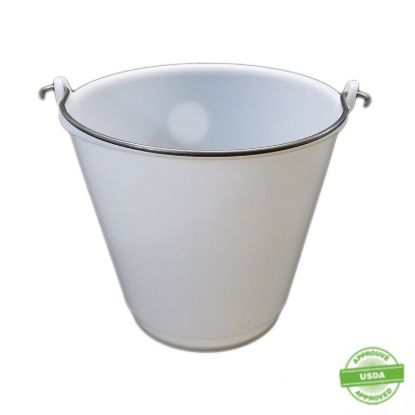
Round bucket with stainless steel handle - 14 L
Food bucket.
Highly durable.
Anti-wear skirt for increased product durability.
Made from low density polyethylene making it highly resistant.
Stainless steel handle.
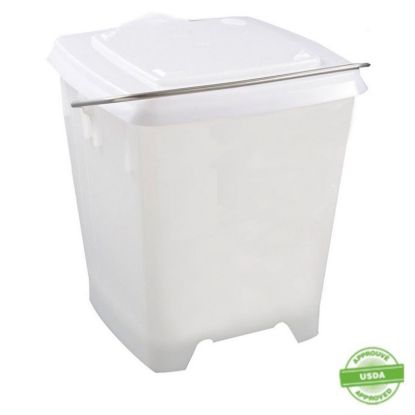
Square bucket 15 L and watertight lid
Bucket fit for food contact with watertight lid.
Airtight lid keeps flavours in and odours out.
Nesting when empty, no suction and stacking when lid is closed.
Enables liquid preparations to be stored and transported.
Graduation in litres.
Discharge area that prevents water retention when being cleaned and anti-wear skirt that lifts the bucket off the ground.
HDPE bucket body and LDPE lid.
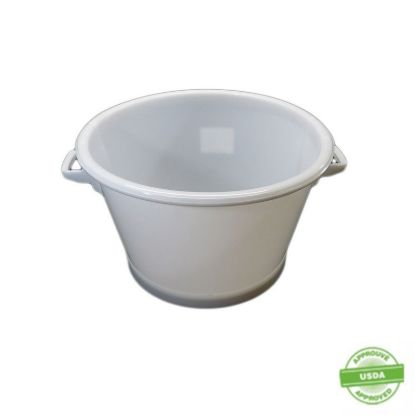
Coagulation vat 35 L with reinforced bottom
Rigid walls to prevent distortion when loaded.
Ergonomic handles.
Easy to clean and dry.
Anti-wear skirt.
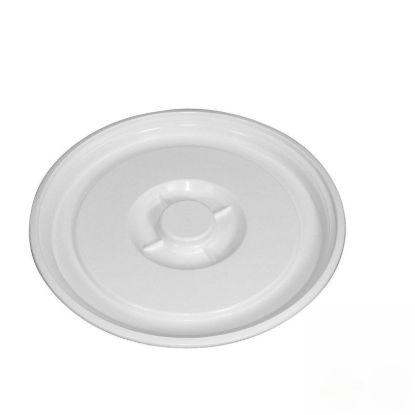
Lid for 35 L vat
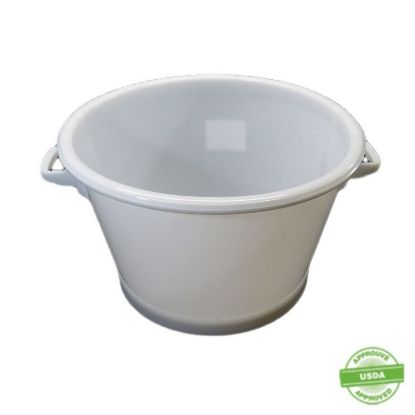
Coagulation vat 50 L with reinforced bottom
Rigid walls to prevent distortion when loaded.
Ergonomic handles.
Easy to clean and dry.
Anti-wear skirt.

Lid for 50L vat

Coagulation vat 75 L with reinforced bottom
Rigid walls to prevent distortion when loaded.
Ergonomic handles.
Easy to clean and dry.
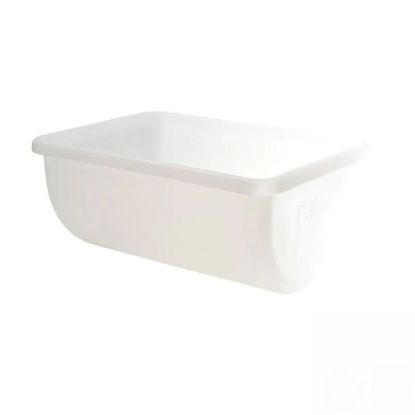
Coagulation vat 170 L
Large volume semicircular container.
Extremely durable.
High resistance to chemical products.
Compatible with stand on wheels.

Coagulation vat 220 L
Large volume semicircular container.
Extremely durable.
High resistance to chemical products.
Compatible with stand on wheels.
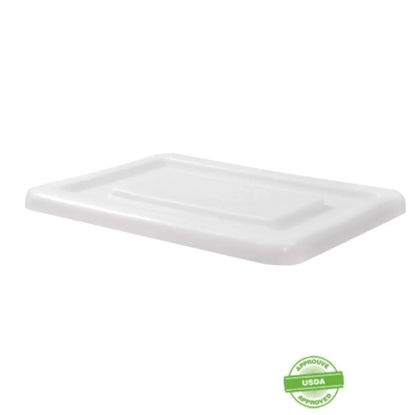
Lid for half-cylindrical vat
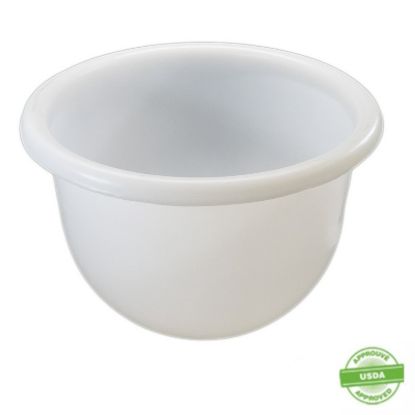
Hemispherical vat 75 L
Large volume hemispheric container.
Extremely durable.
Resistance to chemical products.
Tough and very strong.

Reinforced container - 10 L
Reinforced container.
Excellent mechanical resistance.
Made of low density polyethylene for increased shock resistance.
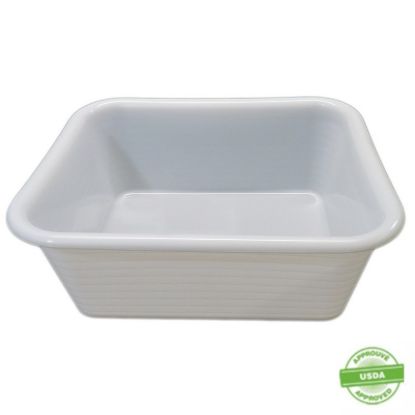
Reinforced container - 19 L
Reinforced container.
Excellent mechanical resistance.
Made of low density polyethylene for increased shock resistance.
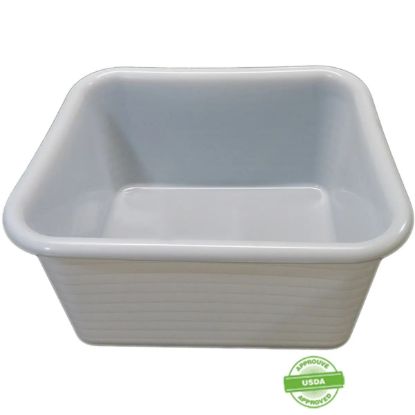
Reinforced container - 30 L
Reinforced container.
Excellent mechanical resistance.
Made of low density polyethylene for increased shock resistance.

Reinforced container - 45 L
Reinforced container.
Excellent mechanical resistance.
Made of low density polyethylene for increased shock resistance.
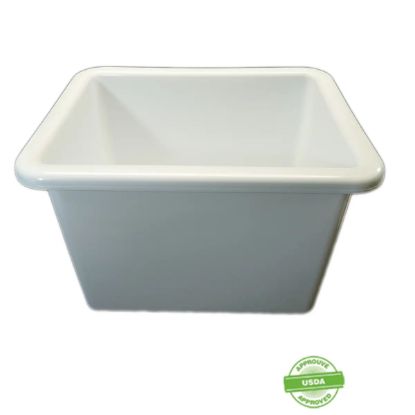
Reinforced container - 55 L
Reinforced container.
Excellent mechanical resistance.
Made of low density polyethylene for increased shock resistance.
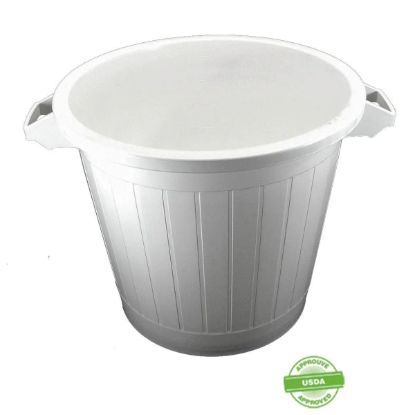
Coagulation vat 75 L
Made with: Food grade polypropylene
Height: 480mm
Compliance: USDA
Color: White
Weight: 3.3 kg
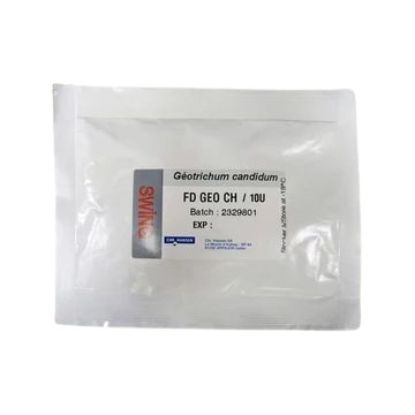
GEO CH Swing Freeze-dried 10u
A selected single strain ripening culture with origin in traditional French cheese making.
The SWING® GEO cultures contributes to the flavor, texture, and appearance of cheese.
The culture is available as a conidia suspension.
The culture may be used in production of many types of cheeses including white mold surface (e.g.Camembert type), smeared and mixed rind, soft and semi-hard, and blue mold cheeses.
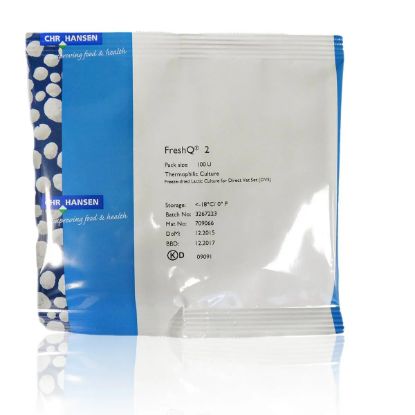
FreshQ 2 Freeze-dried 100u
The FreshQ® cultures are combinations of traditional lactic acid bacteria that deliver inhibition of unwanted yeast and moulds in fermented dairy products.
The effect is obtained through active participation in the natural fermentation.
The cultures are added in combination with the normal starter culture in the production of fermented dairy products.
The cultures are developed for application in e.g. Fresh cheese, yoghurt, sour cream.
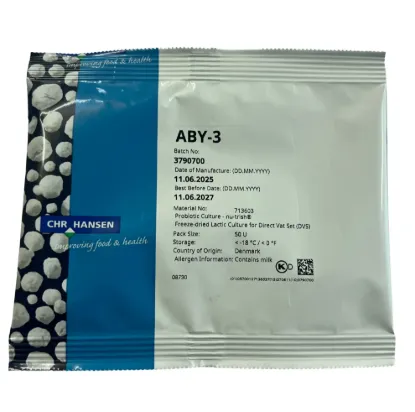
ABY-3 Freeze-dried 50u
Thermophilic lactic acid culture.
Contains the documented probiotic strains BB-12 ® and LA-5®.
The strains have a long history of safe use.
The culture will produce yoghurt or fermented milk with high body, very mild flavor and very low post-acidification.
Suitable for cup set, stirred and drinking yoghurt.
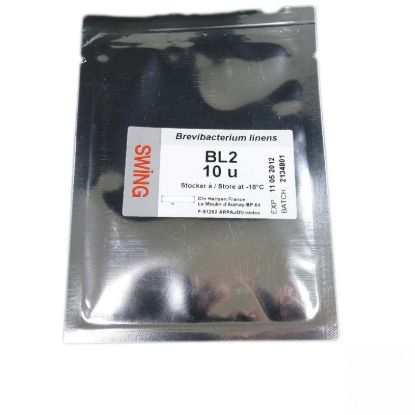
BL-2 Swing Freeze-dried 10u
A selected single strain culture with origins in traditional cheese making.
Brevibacterium is one of the most important surface bacteria for its role in coloring the surface of the cheese, and producing flavor.
The culture may be applied in the production of smeared soft and semi-hard cheeses, mold soft cheese, or mixed rind cheeses.
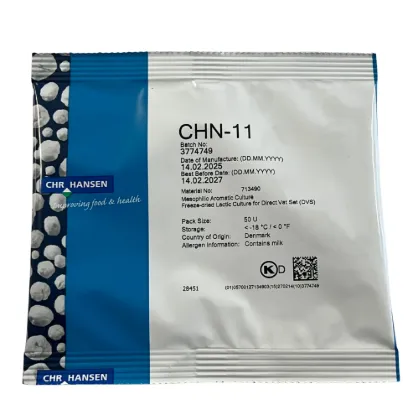
CHN-11 Freeze-dried 50u
Mesophilic aromatic culture, type LD.
The culture produces flavor and CO2.
This range provides cultures with fast acidification properties at a low inoculation rate.
The culture is primarily used in the manufacturing of Continental semi-hard cheese varieties with eyes, e.g. Gouda, Edam, Leerdam and Havarti.
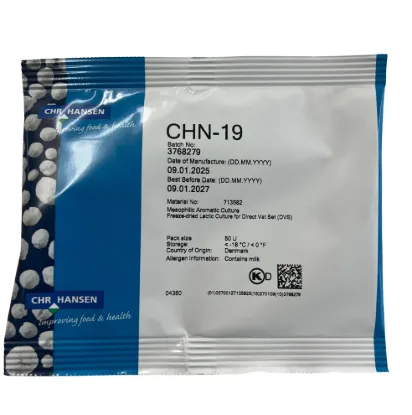
CHN-19 Freeze-dried 50u
Mesophilic aromatic culture, type LD.
The culture produces flavor and CO2.
This range provides cultures with fast acidification properties at a low inoculation rate.
As a principal rule 1000 U of freeze-dried DVS cultures will correspond to 100 l of active bulk starter.
However, specific usage rates should be determined experimentally before a new application.
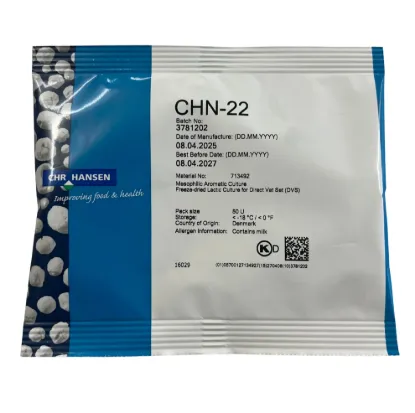
CHN-22 Freeze-dried 50 u
Mesophilic aromatic culture, type LD.
The culture produces flavor and CO2.
This range provides cultures with fast acidification properties at a low inoculation rate.
The culture is primarily used in the manufacturing of Continental semi-hard cheese varieties with eyes, e.g. Gouda, Edam, Leerdam and Havarti.