







Shop







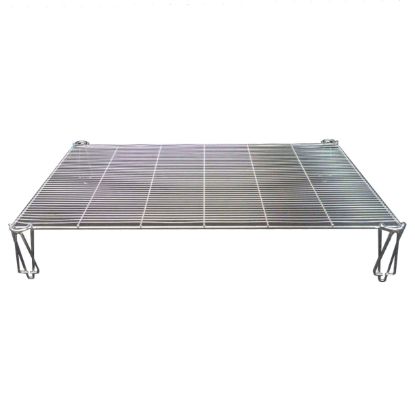
Stainless Steel Aging Racks 780 x 560 mm, 44 wires, H145/130 mm
For a homogeneous rind development
The racks are assembled in stacks, leaving sufficient space for uniform ventilation of each cheese.
Racks constructed from stainless steel wire are a flexible solution that optimizes space in the factory, from storage to use.
Our wire stainless steel aging racks are used for ripening, brining and drying cheeses allowing an optimal ventilation and support of the products.
The choice of rack size should be done according to the cheese size and type.
They stack legs on legs to create shelves where the cheeses can be placed.
This modular solution will optimize the space in the room allowing an even result and an easy manipulation.
It suits well for fresh, soft and semi-soft cheeses, blue cheeses and other varieties that need to ripen or dry.
Made in #304 SS.
Assembly of the wires on the frame by food-grade spot welding.
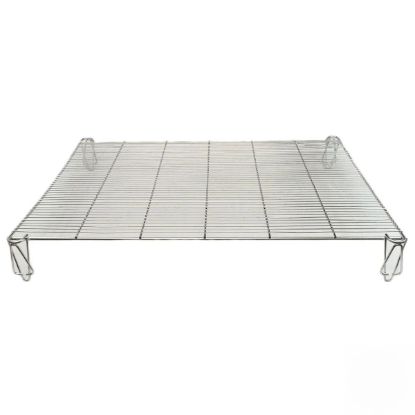
Stainless Steel Aging Racks 780 x 560mm, 44 wires, H105/90mm
For a homogeneous rind development
The racks are assembled in stacks, leaving sufficient space for uniform ventilation of each cheese.
Racks constructed from stainless steel wire are a flexible solution that optimizes space in the factory, from storage to use.
Our wire stainless steel aging racks are used for ripening, brining and drying cheeses allowing an optimal ventilation and support of the products.
The choice of rack size should be done according to the cheese size and type.
They stack legs on legs to create shelves where the cheeses can be placed.
This modular solution will optimize the space in the room allowing an even result and an easy manipulation.
It suits well for fresh, soft and semi-soft cheeses, blue cheeses and other varieties that need to ripen or dry.
Made in #304 SS.
Assembly of the wires on the frame by food-grade spot welding.
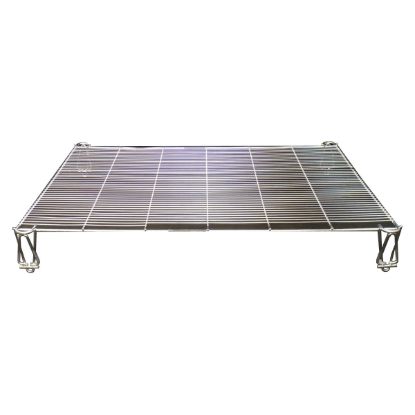
Stainless Steel Aging Racks 780 x 560 mm, 44 wires, H105/85 mm
For a homogeneous rind development
The racks are assembled in stacks, leaving sufficient space for uniform ventilation of each cheese.
Racks constructed from stainless steel wire are a flexible solution that optimizes space in the factory, from storage to use.
Our wire stainless steel aging racks are used for ripening, brining and drying cheeses allowing an optimal ventilation and support of the products.
The choice of rack size should be done according to the cheese size and type.
They stack legs on legs to create shelves where the cheeses can be placed.
This modular solution will optimize the space in the room allowing an even result and an easy manipulation.
It suits well for fresh, soft and semi-soft cheeses, blue cheeses and other varieties that need to ripen or dry.
Made in #304 SS.
Assembly of the wires on the frame by food-grade spot welding.
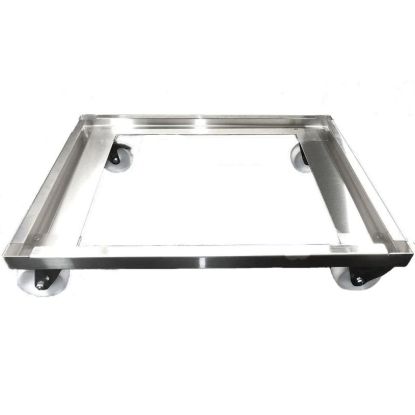
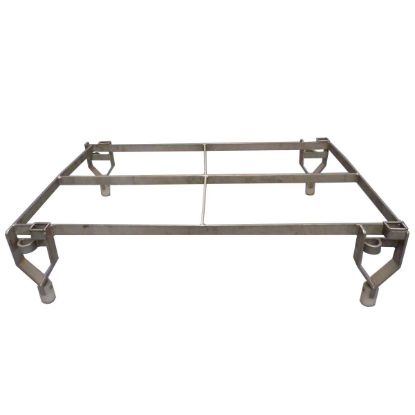
Base on wheels for ripening rack 760 x 580mm and 750 x 510mm - 4 in. wheels
| Quantity | Price |
|---|---|
| 1 + | $397.55 |
| 10 + | $377.67 |
| 30 + | $357.80 |
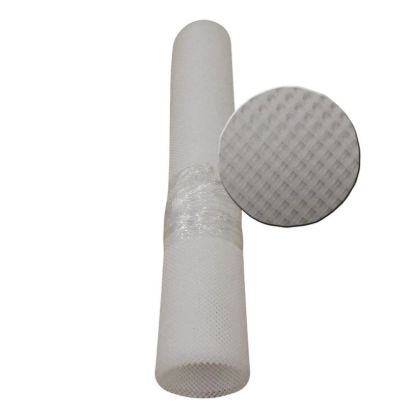
Ripening mat medium #1 50cm x 1m
Mats for covering racks
Covering racks with mats helps minimize the marking of delicate cheeses.
| Quantity | Price |
|---|---|
| 1 + | $26.57 |
| 8 + | $21.26 |
| 16 + | $18.60 |
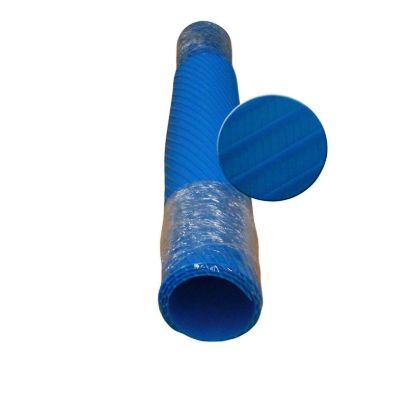
Ripening mat straw type 69 cm x 1 m
Mats for covering racks
Covering racks with mats helps minimize the marking of delicate cheeses.
| Quantity | Price |
|---|---|
| 1 + | $42.89 |
| 8 + | $34.31 |
| 16 + | $30.02 |
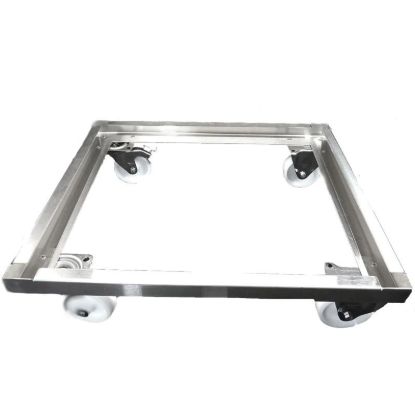
Base on wheels for ripening rack 630 x 510mm
| Quantity | Price |
|---|---|
| 1 + | $329.65 |
| 10 + | $313.17 |
| 30 + | $296.69 |
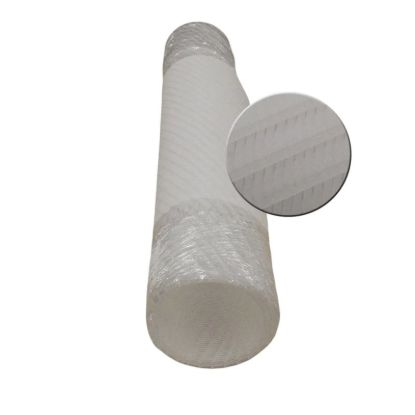
Ripening mat straw type 69cm x 1m
Mats for covering racks
Covering racks with mats helps minimize the marking of delicate cheeses.
| Quantity | Price |
|---|---|
| 1 + | $43.34 |
| 8 + | $34.67 |
| 16 + | $30.34 |
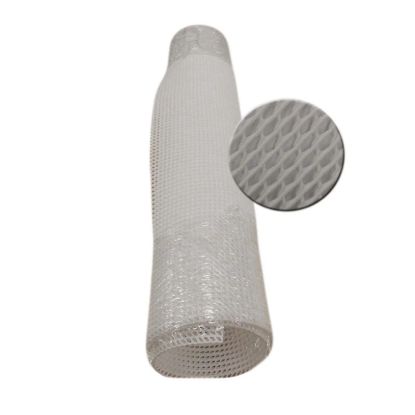
Ripening mat diagonal 50 cm x 1 m
Mats for covering racks
Covering racks with mats helps minimize the marking of delicate cheeses.
| Quantity | Price |
|---|---|
| 1 + | $32.31 |
| 8 + | $25.85 |
| 16 + | $22.62 |
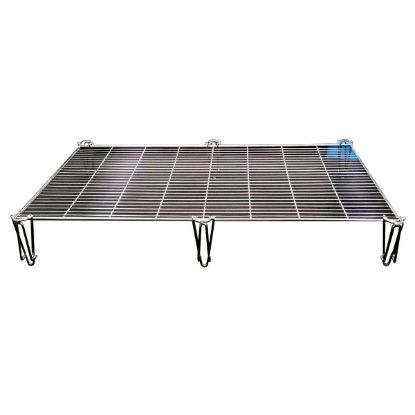
Stainless Steel Aging Racks 850 x 510 mm, 25 wires, H130/100 mm
For a homogeneous rind development
The racks are assembled in stacks, leaving sufficient space for uniform ventilation of each cheese.
Racks constructed from stainless steel wire are a flexible solution that optimizes space in the factory, from storage to use.
Our wire stainless steel aging racks are used for ripening, brining and drying cheeses allowing an optimal ventilation and support of the products.
The choice of rack size should be done according to the cheese size and type.
They stack legs on legs to create shelves where the cheeses can be placed.
This modular solution will optimize the space in the room allowing an even result and an easy manipulation.
It suits well for fresh, soft and semi-soft cheeses, blue cheeses and other varieties that need to ripen or dry.
Made in #304 SS.
Assembly of the wires on the frame by food-grade spot welding.

Stainless Steel Aging Racks 780 x 560 mm, 44 wires, H150/120 mm
For a homogeneous rind development
The racks are assembled in stacks, leaving sufficient space for uniform ventilation of each cheese.
Racks constructed from stainless steel wire are a flexible solution that optimizes space in the factory, from storage to use.
Our wire stainless steel aging racks are used for ripening, brining and drying cheeses allowing an optimal ventilation and support of the products.
The choice of rack size should be done according to the cheese size and type.
They stack legs on legs to create shelves where the cheeses can be placed.
This modular solution will optimize the space in the room allowing an even result and an easy manipulation.
It suits well for fresh, soft and semi-soft cheeses, blue cheeses and other varieties that need to ripen or dry.
Made in #304 SS.
Assembly of the wires on the frame by food-grade spot welding.
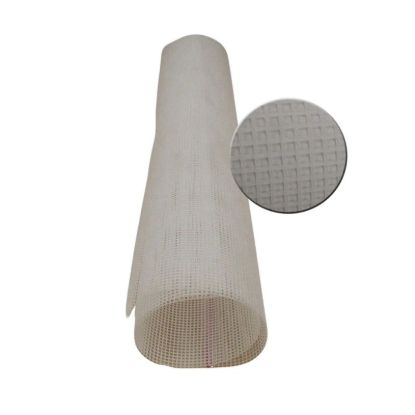
Ripening mat square mesh 1 m x 1 m
Mats for covering racks
Covering racks with mats helps minimize the marking of delicate cheeses.
| Quantity | Price |
|---|---|
| 1 + | $31.76 |
| 8 + | $25.41 |
| 14 + | $22.23 |
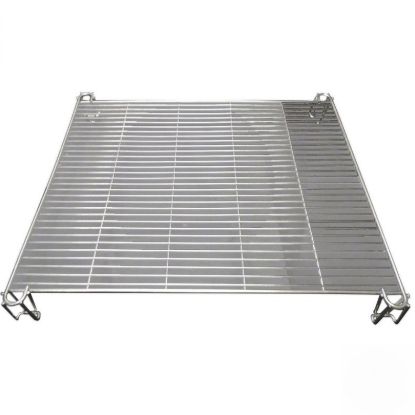
Ripening rack 630 x 510 mm, 31 wires, H85/55 mm
For a homogeneous rind development
The racks are assembled in stacks, leaving sufficient space for uniform ventilation of each cheese.
Racks constructed from stainless steel wire are a flexible solution that optimizes space in the factory, from storage to use.
Our wire stainless steel aging racks are used for ripening, brining and drying cheeses allowing an optimal ventilation and support of the products.
The choice of rack size should be done according to the cheese size and type.
They stack legs on legs to create shelves where the cheeses can be placed.
This modular solution will optimize the space in the room allowing an even result and an easy manipulation.
It suits well for fresh, soft and semi-soft cheeses, blue cheeses and other varieties that need to ripen or dry.
Made in #304 SS.
Assembly of the wires on the frame by food-grade spot welding.
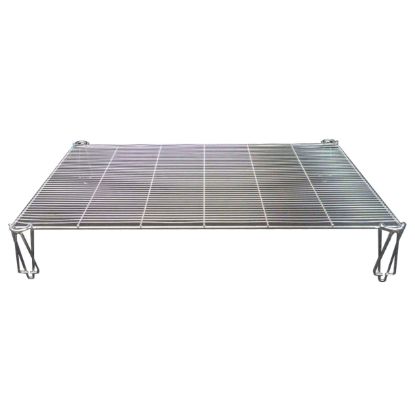
Stainless Steel Aging Racks 780 x 560 mm, 44 wires, H145/120 mm
For a homogeneous rind development
The racks are assembled in stacks, leaving sufficient space for uniform ventilation of each cheese.
Racks constructed from stainless steel wire are a flexible solution that optimizes space in the factory, from storage to use.
Our wire stainless steel aging racks are used for ripening, brining and drying cheeses allowing an optimal ventilation and support of the products.
The choice of rack size should be done according to the cheese size and type.
They stack legs on legs to create shelves where the cheeses can be placed.
This modular solution will optimize the space in the room allowing an even result and an easy manipulation.
It suits well for fresh, soft and semi-soft cheeses, blue cheeses and other varieties that need to ripen or dry.
Made in #304 SS.
Assembly of the wires on the frame by food-grade spot welding.
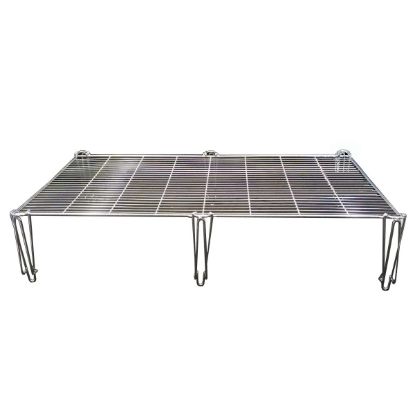
Stainless Steel Aging Racks 850 x 510 mm, 25 wires, H180/150 mm
For a homogeneous rind development
The racks are assembled in stacks, leaving sufficient space for uniform ventilation of each cheese.
Racks constructed from stainless steel wire are a flexible solution that optimizes space in the factory, from storage to use.
Our wire stainless steel aging racks are used for ripening, brining and drying cheeses allowing an optimal ventilation and support of the products.
The choice of rack size should be done according to the cheese size and type.
They stack legs on legs to create shelves where the cheeses can be placed.
This modular solution will optimize the space in the room allowing an even result and an easy manipulation.
It suits well for fresh, soft and semi-soft cheeses, blue cheeses and other varieties that need to ripen or dry.
Made in #304 SS.
Assembly of the wires on the frame by food-grade spot welding.
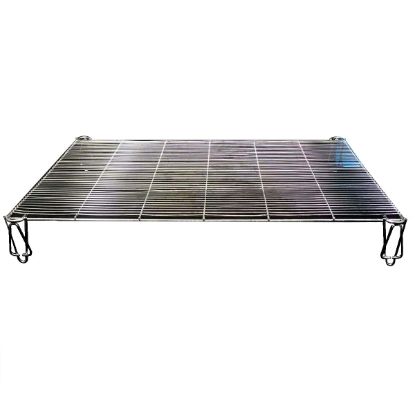
Stainless Steel Aging Racks 780 x 560 mm, 44 wires, H110/80 mm
For a homogeneous rind development
The racks are assembled in stacks, leaving sufficient space for uniform ventilation of each cheese.
Racks constructed from stainless steel wire are a flexible solution that optimizes space in the factory, from storage to use.
Our wire stainless steel aging racks are used for ripening, brining and drying cheeses allowing an optimal ventilation and support of the products.
The choice of rack size should be done according to the cheese size and type.
They stack legs on legs to create shelves where the cheeses can be placed.
This modular solution will optimize the space in the room allowing an even result and an easy manipulation.
It suits well for fresh, soft and semi-soft cheeses, blue cheeses and other varieties that need to ripen or dry.
Made in #304 SS.
Assembly of the wires on the frame by food-grade spot welding.
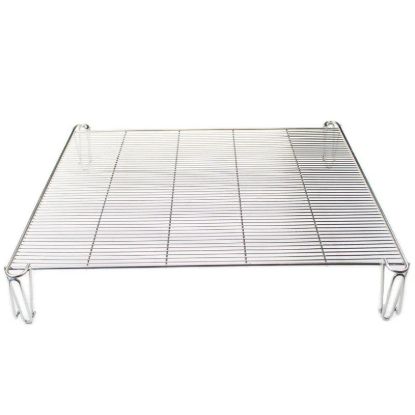
Stainless steel aging rack 630 x 510 mm, 51 wires, H120/100 mm
For a homogeneous rind development
The racks are assembled in stacks, leaving sufficient space for uniform ventilation of each cheese.
Racks constructed from stainless steel wire are a flexible solution that optimizes space in the factory, from storage to use.
Our wire stainless steel aging racks are used for ripening, brining and drying cheeses allowing an optimal ventilation and support of the products.
The choice of rack size should be done according to the cheese size and type.
They stack legs on legs to create shelves where the cheeses can be placed.
This modular solution will optimize the space in the room allowing an even result and an easy manipulation.
It suits well for fresh, soft and semi-soft cheeses, blue cheeses and other varieties that need to ripen or dry.
Made in #304 SS.
Assembly of the wires on the frame by food-grade spot welding.
| Quantity | Price |
|---|---|
| 1 + | $51.75 |
| 250 + | $47.64 |
| 500 + | $44.14 |
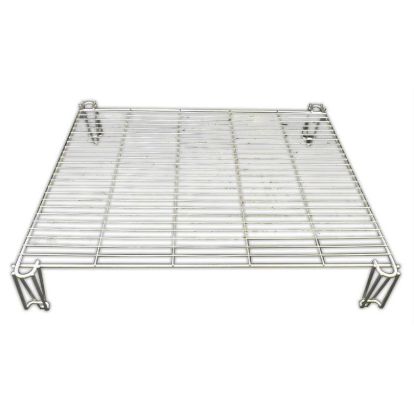
Stainless steel aging rack 630 x 510 mm, 25 wires, H120/100 mm (Electropolished)
For a homogeneous rind development
The racks are assembled in stacks, leaving sufficient space for uniform ventilation of each cheese.
Racks constructed from stainless steel wire are a flexible solution that optimizes space in the factory, from storage to use.
Our wire stainless steel aging racks are used for ripening, brining and drying cheeses allowing an optimal ventilation and support of the products.
The choice of rack size should be done according to the cheese size and type.
They stack legs on legs to create shelves where the cheeses can be placed.
This modular solution will optimize the space in the room allowing an even result and an easy manipulation.
It suits well for fresh, soft and semi-soft cheeses, blue cheeses and other varieties that need to ripen or dry.
Made in #304 SS.
Assembly of the wires on the frame by food-grade spot welding.
| Quantity | Price |
|---|---|
| 1 + | $46.55 |
| 150 + | $42.83 |
| 500 + | $40.96 |
| 750 + | $39.57 |
| 1000 + | $37.24 |
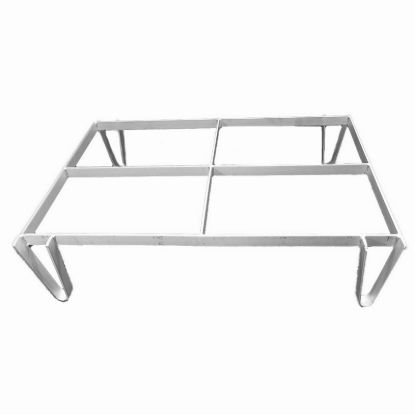
Base for ripening rack 750 x 510 mm
| Quantity | Price |
|---|---|
| 1 + | $212.62 |
| 50 + | $193.70 |
| 80 + | $177.88 |
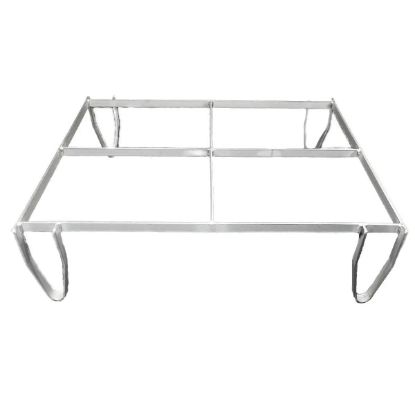
Base for ripening rack 630 x 510 mm
| Quantity | Price |
|---|---|
| 1 + | $198.00 |
| 50 + | $173.25 |
| 80 + | $154.00 |
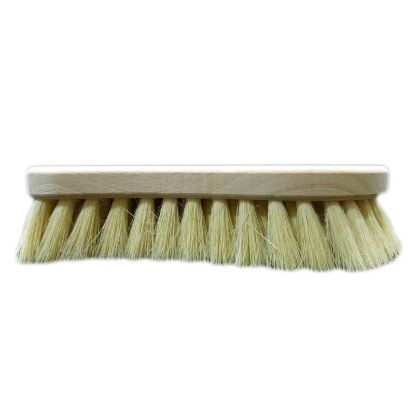
Manual cheese brush S-shape
| Quantity | Price |
|---|---|
| 1 + | $21.28 |
| 4 + | $19.15 |
| 10 + | $17.41 |

Manual cheese brush Mont d'Or
| Quantity | Price |
|---|---|
| 1 + | $61.52 |
| 5 + | $55.93 |
| 9 + | $51.26 |
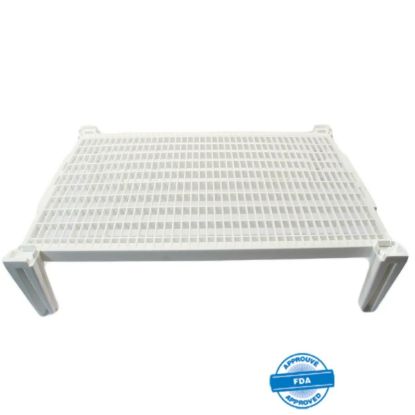
Plastic aging rack 745 x 505 mm, H180/160 mm
Robust rack adapted to heavy loads
Plastic racks are light and sturdy, suitable for pressed cheese.
Our plastic aging racks are used for ripening, brining and drying cheeses allowing an optimal ventilation and support of the products.
The choice of rack height should be done according to the cheese size.
They stack legs on legs to create shelves where the cheeses can be placed.
This modular solution will optimize the space in the room allowing an even result and an easy manipulation.
It suits well for semi-hard to hard cheeses and blue cheeses.
Made in injected food-grade polypropylene, they are heavy duty and can be stack with a lot of weight on at more than 2 meters.
| Quantity | Price |
|---|---|
| 1 + | $51.99 |
| 120 + | $47.18 |
| 240 + | $43.18 |